

The Annapurna Circuit Trek is more than a mountain trail — it is a gradual passage through changing worlds. Over the course of nearly 160–230 kilometers, depending on the route taken, trekkers move from subtropical river valleys to alpine deserts beneath some of the highest peaks on Earth. Few treks in the Himalayas offer such dramatic shifts in terrain, elevation, climate, vegetation, and wildlife within a single journey.
Encircling the mighty Annapurna Massif, the trail crosses deep gorges, glacial valleys, high mountain passes, ancient villages, pine forests, yak pastures, and windswept Tibetan plateaus. It is a trek where geography itself feels alive.
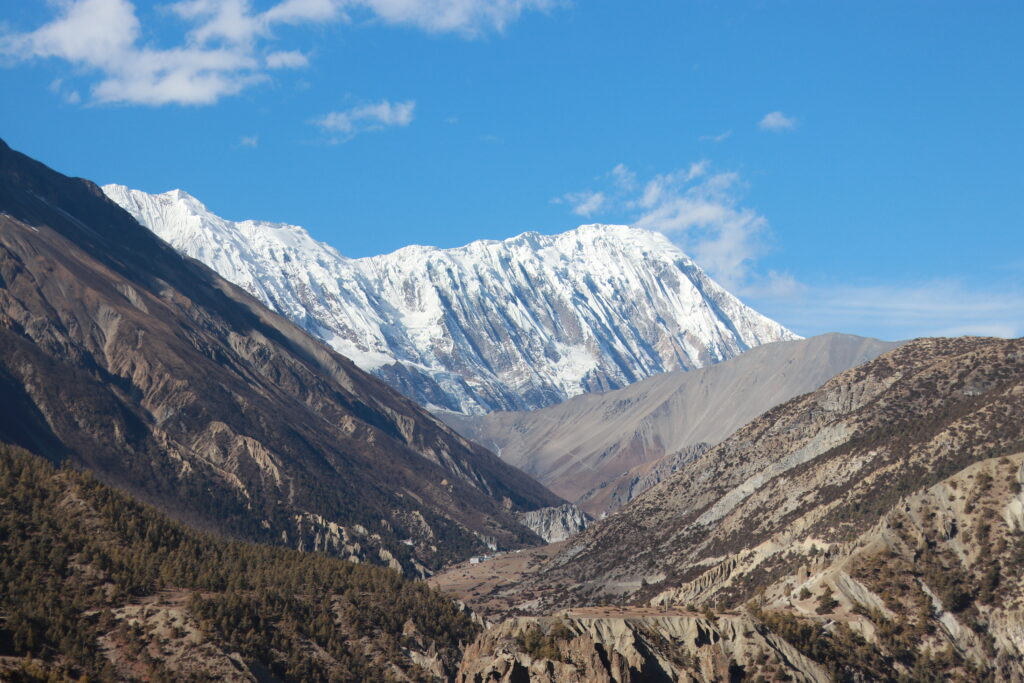
Geography of the Annapurna Circuit
The Annapurna Circuit lies in central Nepal within the vast Annapurna Conservation Area Project, Nepal’s largest protected region. The route circles the Annapurna range, which includes several towering Himalayan giants:
- Annapurna I — 8,091 meters
- Dhaulagiri — 8,167 meters
- Manaslu — 8,163 meters
- Machapuchare — the sacred “Fishtail Mountain”
The trek usually begins in lush lowland villages such as Besisahar or Dharapani and gradually ascends through the Marsyangdi River valley before crossing the legendary Thorong La Pass at 5,416 meters.
One of the trek’s most remarkable geographical features is the transition between climatic zones. The southern slopes receive monsoon rains and support dense forests, while the northern side beyond Manang falls into the Himalayan rain shadow, creating dry, desert-like landscapes similar to Tibet.
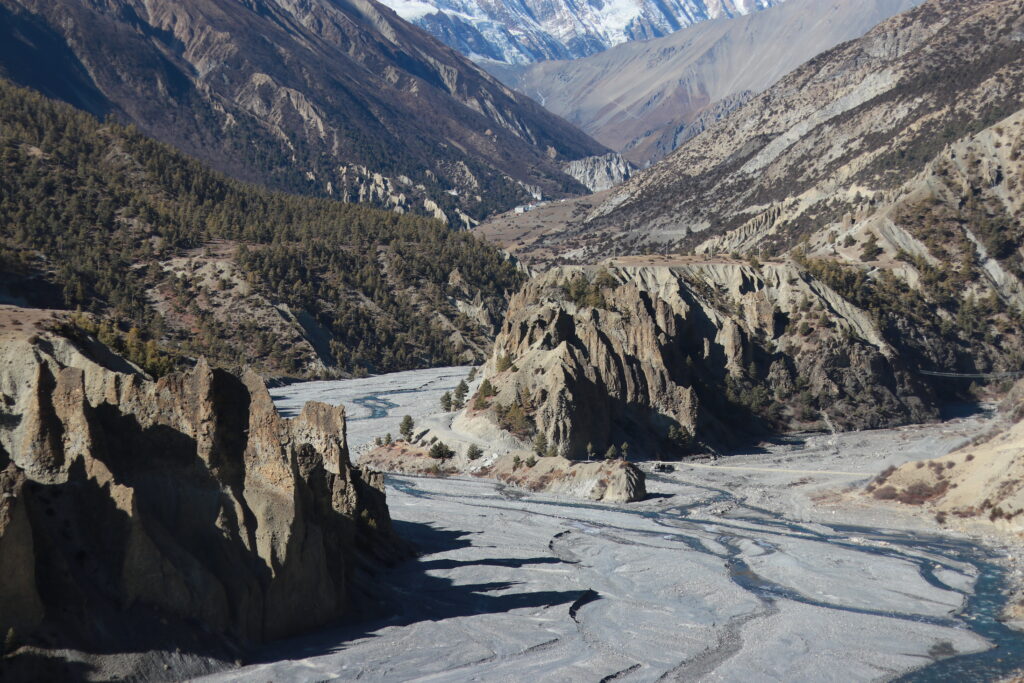
Elevation and Altitude Zones
The Annapurna Circuit climbs through several ecological and climatic zones in a relatively short distance.
| Region | Approximate Elevation | Environment |
|---|---|---|
| Lower valleys | 800–2,000 m | Subtropical forests and farms |
| Mid hills | 2,000–3,500 m | Temperate woodland |
| Alpine region | 3,500–4,500 m | Shrubs and grasslands |
| High Himalaya | 4,500–5,416 m | Snowfields and barren rock |
The dramatic elevation gain affects not only the scenery but also oxygen levels, temperature, and biodiversity. Proper acclimatization is essential, especially before crossing Thorong La.
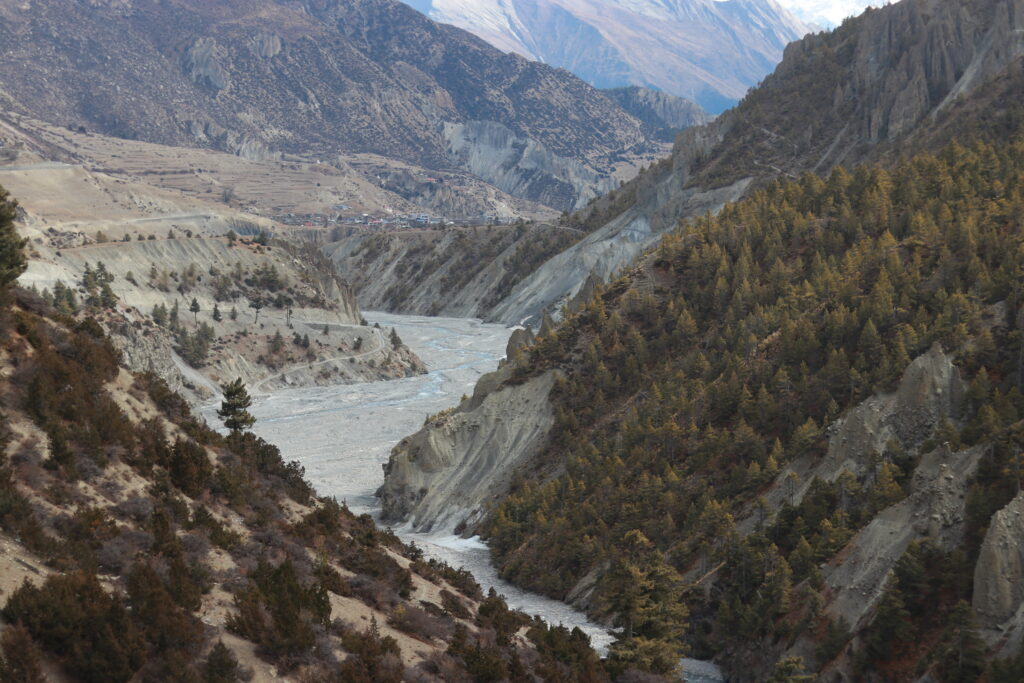
Flora: Forests and Alpine Plants
The Annapurna region contains one of the richest ecological systems in the Himalayas. Trekkers pass through forests that support hundreds of plant species adapted to changing altitude and climate.
Trees Found Along the Circuit
Rhododendron
Nepal’s national flower grows abundantly in mid-elevation forests. In spring, blooming rhododendrons paint the hillsides in brilliant colors.
Blue Pine and Fir
Higher temperate zones are dominated by conifer forests that thrive in cool mountain climates.
Oak and Maple
Common in lower and middle elevations, especially in moist valleys.
Juniper
At higher elevations, hardy juniper shrubs survive where larger trees cannot.
Birch
Thin Himalayan birch forests appear near the upper tree line.
Alpine Vegetation
Above 4,000 meters, vegetation becomes sparse but highly specialized:
- Dwarf shrubs
- Alpine grasses
- Cushion plants
- Mosses and lichens
These plants survive freezing temperatures, intense UV exposure, and strong winds.
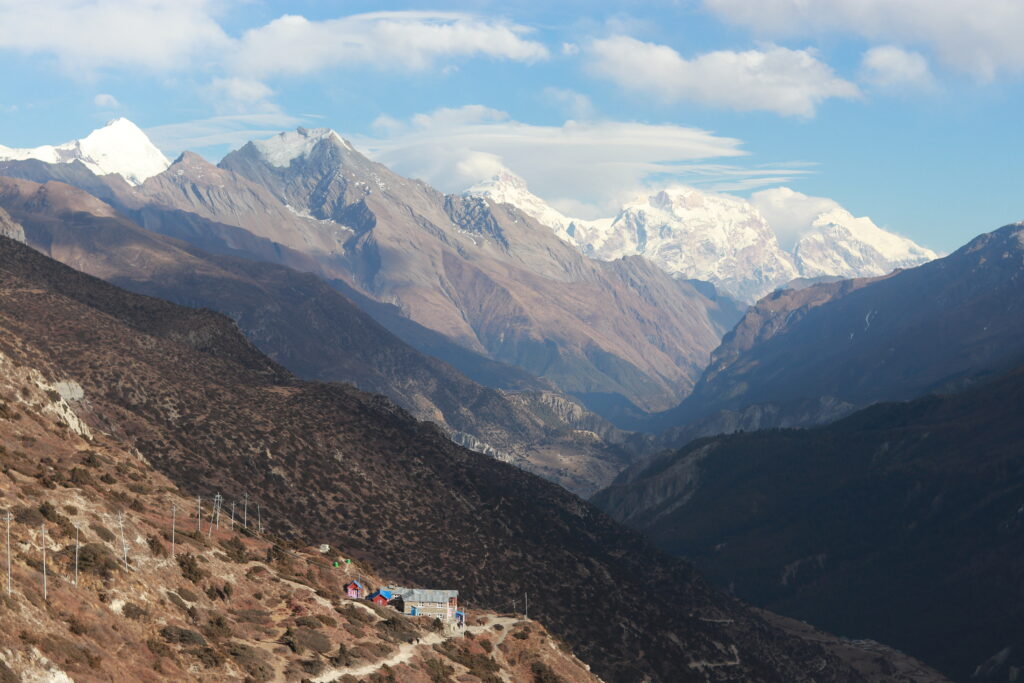
Birds of the Annapurna Region
The Annapurna Conservation Area is a paradise for birdwatchers, with more than 450 bird species recorded.
Himalayan Monal
The dazzling Himalayan Monal, Nepal’s national bird, is one of the most beautiful pheasants in the world. Its iridescent feathers flash blue, green, copper, and gold in mountain sunlight.
Lammergeier (Bearded Vulture)
These enormous birds soar high above cliffs and valleys, often seen gliding near Thorong La.
Snow Pigeon
Adapted to high-altitude environments, snow pigeons gather around rocky settlements and mountain monasteries.
Blood Pheasant
A shy Himalayan bird usually found in dense alpine scrub.
Golden Eagle
Occasionally spotted hunting across open ridges and barren slopes.
Wildlife of the Annapurna Circuit
Despite the harsh environment, the Annapurna region supports remarkable Himalayan wildlife.
Snow Leopard
The elusive Snow Leopard inhabits the higher trans-Himalayan areas. Sightings are extremely rare, but the region is an important conservation habitat.
Himalayan Tahr
These wild mountain goats are frequently seen climbing steep rocky cliffs with astonishing agility.
Blue Sheep
Also known as bharal, these animals inhabit alpine slopes and are a primary prey species for snow leopards.
Musk Deer
Found in forested areas at mid-to-high elevations.
Langur Monkeys
Grey langurs are common in lower forest regions and often travel in social groups through the trees.
Yak
Although domesticated, yaks are iconic animals of the high Himalaya, carrying supplies and grazing in alpine meadows.
Monasteries and Spiritual Life Along the Annapurna Circuit
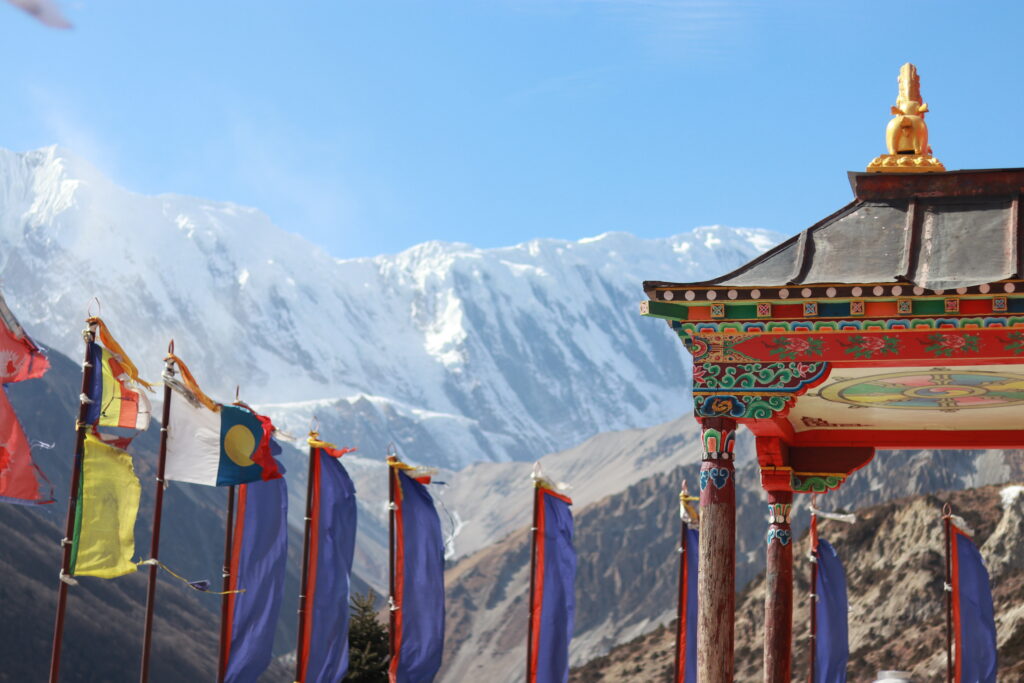
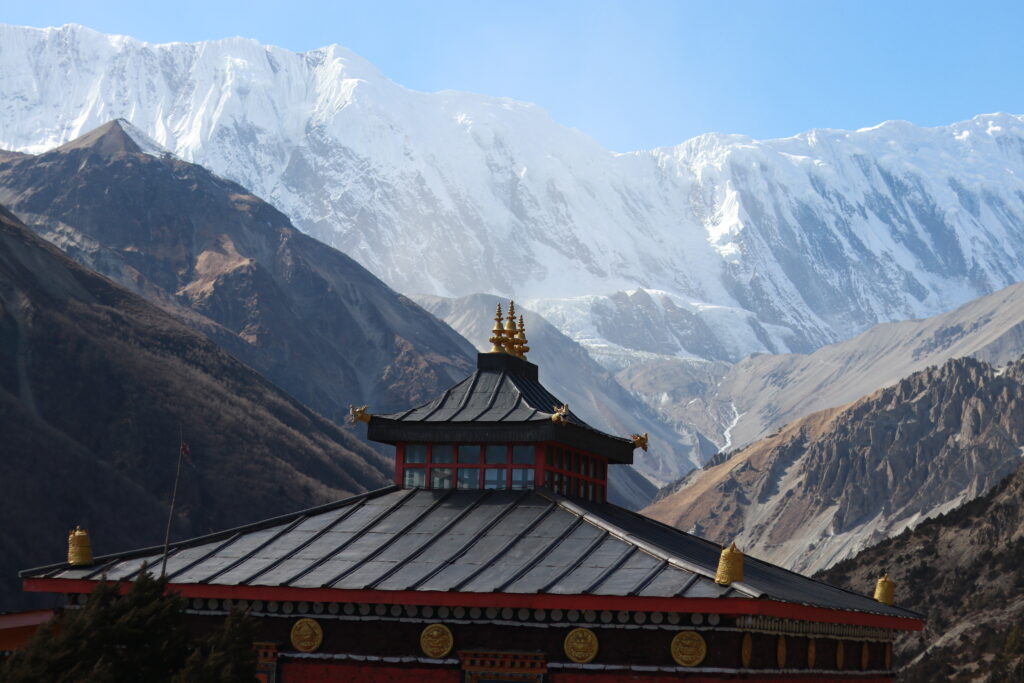
Beyond its mountains and landscapes, the Annapurna Circuit Trek is also a deeply spiritual journey. As trekkers move higher into the Himalayas, especially toward Manang and Mustang, the influence of Tibetan Buddhism becomes increasingly visible. Ancient monasteries, prayer wheels, mani walls, and fluttering prayer flags are woven naturally into the mountain scenery, giving the trail a peaceful and sacred atmosphere.
For centuries, these monasteries have served as places of meditation, learning, and refuge for Himalayan communities living in some of the world’s harshest environments. Built from stone and timber, often perched dramatically on cliffs or overlooking isolated valleys, they reflect both spiritual devotion and remarkable adaptation to mountain life.
One of the most significant spiritual sites on the circuit is Braga Monastery, an ancient Tibetan Buddhist monastery located above the village of Braga near Manang. Believed to be several hundred years old, the monastery contains old murals, sacred scriptures, prayer wheels, and statues illuminated by butter lamps. From its hilltop position, visitors can look across the entire Manang Valley toward snow-covered Himalayan peaks.
As trekkers pass through villages such as Manang, Pisang, and Muktinath, they encounter:
- Stone mani walls carved with Buddhist prayers
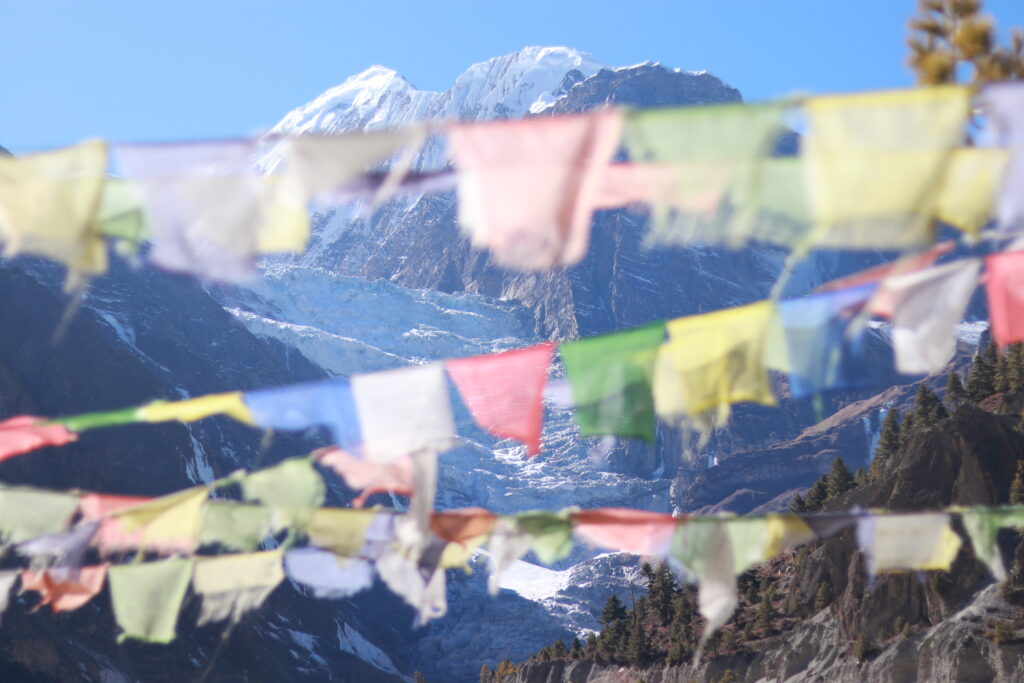
- Colorful prayer flags stretched across ridges and passes
- Chortens and stupas marking sacred ground
- Monks chanting inside dimly lit monasteries
- Prayer wheels spun by locals and pilgrims
The spiritual heart of the region becomes especially powerful near Muktinath Temple, a sacred pilgrimage site revered by both Hindus and Buddhists. Located at an altitude of around 3,800 meters, Muktinath symbolizes purification and liberation. Pilgrims from Nepal, Tibet, and India travel long distances to visit the temple’s eternal flame and holy water spouts.
In the high Himalayas, where nature can feel overwhelming and unforgiving, these monasteries offer moments of silence and reflection. The sound of spinning prayer wheels, the scent of incense, and the sight of monks walking beneath snow peaks create a spiritual dimension that makes the Annapurna Circuit far more than just a trekking route.
It becomes a cultural and spiritual passage through the Himalayan world — where mountains, religion, and daily life exist in profound harmony.
A Trek Through Living Ecosystems
What makes the Annapurna Circuit extraordinary is not simply its mountains, but the sheer diversity compressed into one journey. In a matter of days, trekkers move from humid subtropical valleys filled with rice terraces and waterfalls to silent Himalayan deserts beneath glaciers and snow peaks.
The trek is both a geographical expedition and an ecological transition — a rare opportunity to witness how altitude shapes climate, forests, wildlife, and human culture across the Himalayas.
For many travelers, the Annapurna Circuit is not just a hike. It is a gradual immersion into the natural architecture of Nepal itself.